
Structures that Remember: Applications of Shape Memory Alloys in Seismic Design
Dates: Tuesday, December 8, 2026
Agenda:
5 p.m. - 6 p.m. — Networking happy hour with appetizers
6 p.m. -7:30 p.m. —Presentations
Location:
The Faculty Club, University of California - Berkeley
1 Minor Lane
Berkeley, CA
About the Presentation
While not a new material, nitinol, a shape memory alloy, which has beneficial damping and recentering properties, is not commonly employed in structural design. This talk will discuss two local, recent applications of this high-performance material: one retrofit, Congregation Sherith Israel, and one new building Grimes Engineering Center.
Congregation Sherith Israel is an historic unreinforced masonry building now on the National Register of Historic Places that was designed by famed architect/engineer Albert Pissis. Though damaged only modestly by the 1906 earthquake that destroyed some of its unreinforced masonry neighbors, it was subject to a seismic upgrade ordinance. The strengthening philosophy relied heavily on supplementing, rather than supplanting the existing building’s strengths, and leveraging its natural dynamic characteristics. Nitinol was designed to provide structural “fuses” within an octagonally-configured tension tie system to promote re-centering, resist outfall, and control out-of-phase, out-of-plane behaviour of the vulnerable gable end walls, parapet and arches that define the main unreinforced masonry bearing wall facades. Though the nitinol interconnects all four gable end walls, the octagonal configuration of the system resulted in zero disruption to the synagogue’s historic sanctuary. The supplemental seismic work also included a carbon fiber reinforced polymer catenary to prevent outfall of wall segments with high height-to-thickness that could not be center-cored or otherwise improved, and rocking, compression-only pilasters to control northward (outward) displacement of a thin planar exterior wall without incrementing the demand on its floor-to-wall ties when the building sways toward the south.
Superelastic shape memory alloys, specifically superelastic nitinol cables, form part of a dual seismic force-resisting system at UC Berkeley's Grimes Engineering Center. Exposed perimeter SMA tension rods complement interior BRB frames, providing recentering force and energy dissipation with up to 7% strain without permanent deformation. Prior to installation, SOM performed extensive testing, including multi-story shake-table evaluations. The project revitalizes a 1960s concrete building with two new floors, achieving a 65% reduction in embodied carbon compared to new construction. ASCE 41 response history analysis and cyclic testing of full-scale devices demonstrated high repeatability and robust capacity, reaching 14.5% strain at failure. Connection testing confirmed minimal yielding, proving SMA tension rods to be a cost-effective seismic solution for this and future applications.
Speakers
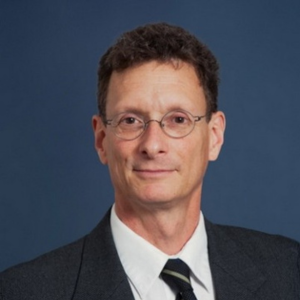 Terrence Paret
Terrence Paret is a Senior Principal at Wiss, Janney, Elstner Associates, Inc. where for 40+ years he has performed hundreds of engineering investigations in the U.S. and abroad, focusing on the evaluation of existing structures in a seismic context. He specializes in large, complex and unique projects, where preservation is a priority. Projects to which he has contributed his preservation-specialized seismic expertise include the Washington Monument, the Washington National Cathedral, the United Nations Secretariat in NYC, the Mauna Kea Hotel, and numerous qualified historic buildings in the San Francisco Bay Area. These include managing seismic assessment and strengthening of two magnificent historic buildings in San Francisco designed by Albert Pissis, Sherith Israel and the Hibernia Bank Building. Mr. Paret has authored/co-authored over 100 technical publications and received a variety of honors and awards for his research and practice, including the 2001 Moisseiff Award from the American Society of Civil Engineers, the 2008 AISC Presidential Award of Excellence in Structural Engineering, the 2012 Oliver Torrey Fuller Award from the Association of Preservation Technology International, the 2016 International Concrete Repair Institute Project of the Year Award, a 2018 NCSEA Outstanding Project Winner Award as well as various awards from SEAONC and SEAOC.
 David Shook
David Shook is a Senior Associate Principal and Structural Engineer at Skidmore, Owings & Merrill in San Francisco, where he leads innovative structural design across a diverse portfolio of projects. With a focus on high-seismic regions, he leverages advanced materials and technologies to achieve enhanced performance while designing for constructability. Through research collaboration, he works to advance urban environments by integrating emerging, low-carbon materials. David is a frequent lecturer on sustainability, performance-based seismic design, and interdisciplinary design at universities and conferences. In addition to serving on multiple building code committees, he has co-authored books on performance-based seismic design and sustainable structural steel design.